
How many restrooms does a race actually need?
Runner count drives the math more than course length does. OSHA 1926.51(c) sets the baseline most planners still use as a reference: one toilet for every 20 people, scaling up as headcount grows. For a spread-out road race in Gastonia, that ratio needs adjusting because runners hit the start line and finish chute in waves, not evenly. A standard porta potty rental works for most water stops. Start and finish areas usually carry more, since spectators and volunteers add to the count. If your race draws from Springdale or Spencer Mountain, both a short drive at 4.5 and 7.0 miles northeast of Gastonia, plan for runners arriving early and lingering after, which stretches your peak restroom demand past the actual race window. We size the order using the how many porta potties do I need guide as a starting point, then adjust for wave starts and split courses. Races with a strong spectator draw or a beer garden at the finish often add a deluxe flushable porta potty or two near the finish line, since that area gets the heaviest traffic of the day. Every race also needs at least one accessible unit per ADA Standards section 213.2, which requires 5 percent of clustered units to be accessible, with a minimum of one regardless of total count.
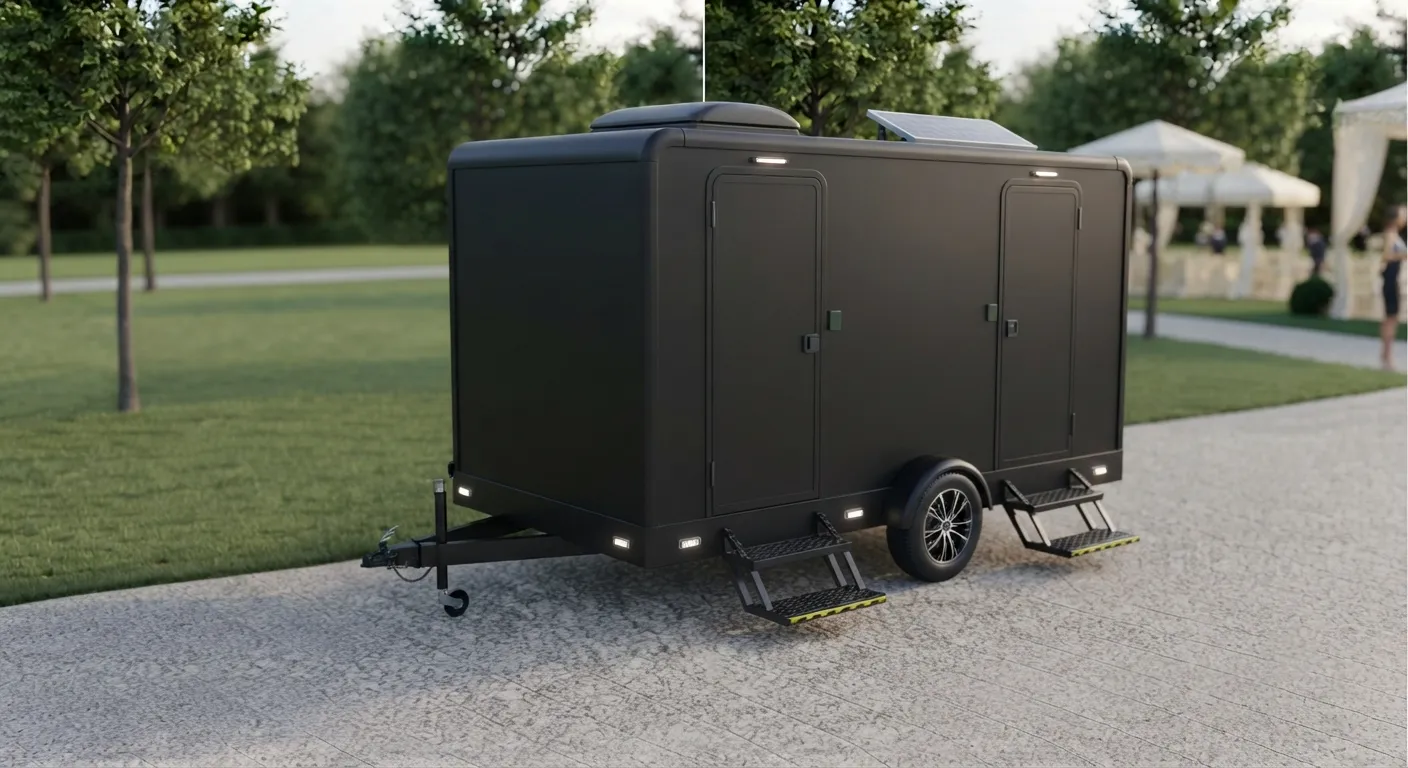
Where should restrooms go on a race course?
Start line, finish chute, and any aid station past mile 3 or 4 are the non-negotiables. Beyond that, placement depends on road closures, course width and where your volunteers can actually reach units for mid-race checks. Our porta potty placement guide covers ground clearance and delivery access, and race organizers should read it before locking a course map, because a unit that looks fine on paper can sit behind a curb no truck can reach. ADA Standards section 405.2 caps ramp slope at 1:12, so units placed on any grade need a compliant approach, not just flat ground under the unit itself. If your course crosses through Belmont, about 11.4 miles east, or ties into a route near Kings Mountain, 11.4 miles west, factor that added drive time into your delivery and pickup windows. Races that also run overnight setup, like a dawn start with a finish-line stage, often need a temporary power pole for timing equipment and PA systems. here's how to brace a temporary power pole on soft turf or gravel: guy-wire it at two points minimum and anchor to a fixed pad, not just the pole's base plate, since wind load on a tall pole with speakers or lighting attached can tip an unbraced install. Pair that with a light tower rental for early starts or late finish lines, and route power cords along the course edge, not across runner lanes.
What about washing stations and cleanup after the race?
Runners need water more than soap mid-race, but finish-line areas benefit from a wash station, especially if there's a post-race meal. 29 CFR 1910.141(d)(2) requires soap and a towel or hand-drying device wherever washing facilities are provided, so a jug of hand sanitizer alone doesn't meet that standard if you're setting up a full station. A handwashing station rental or simple portable sink rental covers food service tents and medical stations. After the race, course cleanup and packed-out gear often fill a dumpster faster than organizers expect, particularly with cup litter at aid stations. A 10 yard dumpster rental handles most single-day races, and if you're running a festival tie-in or expo alongside the race, check what cannot go in a dumpster before volunteers start bagging. Larger events with vendor villages sometimes need temporary fence rental to separate the finish chute from spectator areas, which also helps crowd flow near restroom clusters. For races anchored to a specific venue, our event restroom rental page covers general venue planning, while this page focuses on the course itself. Gastonia's road races vary widely in scale, from neighborhood fun runs to certified marathons, and the restroom count that works for one rarely works for the other.
Frequently asked questions
How far in advance should I book restrooms for a race?
Two to three weeks minimum, longer if your race falls on a weekend with multiple events competing for the same delivery trucks. Standard units run 130 to 500 dollars for a full week if you need units on-site before race day for packet pickup. Request a quote early to lock delivery timing.
Do I need an ADA-accessible unit for a small local race?
Yes. ADA Standards section 213.2 requires at least one accessible unit any time portable toilets are clustered, regardless of total runner count. A 60 inch turning circle per section 304.3.1 also needs to fit at the unit's approach.
Can restrooms be moved along the course during the race?
Units placed for water stops usually stay fixed for the full event; moving one mid-race disrupts runners and isn't practical for delivery crews. Plan your porta potty placement guide layout before race day instead of adjusting on the fly.
What if my race runs into bad weather?
Cold-weather races need units checked for freeze protection; see porta potty in winter for what changes. Wet courses also mean more mud tracked near unit entrances, so we recommend gravel or mat pads under high-traffic units.
Should I order extra units for a race with a big spectator crowd?
Yes, spectators at the finish line often outnumber runners passing through at any given moment. Add units near finish-line bleachers or family reunion areas separate from the runner-only count, and consider a portable restroom rental cluster there instead of spreading a few units thin.
Next step
Get a delivery date
Tell us the address, the dates and the headcount. We size the order and confirm the route.